
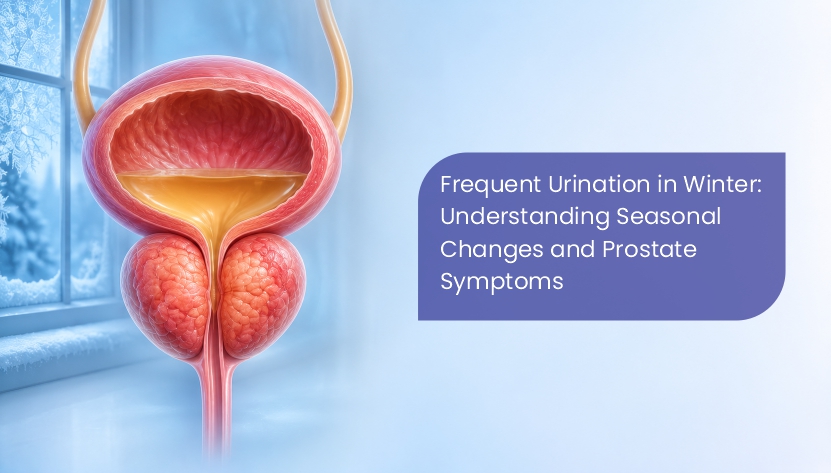
Frequent Urination in Winter: Understanding Seasonal Changes and Prostate Symptoms
Every winter, a familiar pattern repeats itself in many households. A man in his fifties starts waking up at night to pass urine. During the day, he finds himself looking for a washroom more often than usual. He blames the weather, drinks less water to cope, and waits for spring.
Cold exposure may contribute to increased urine production in some people. However, persistent symptoms can also be related to prostate enlargement, bladder conditions, diabetes, infection or medicines. The symptoms can overlap, making individual assessment useful when changes continue.
Understanding the pattern of urinary symptoms can help distinguish temporary changes from concerns that may need medical evaluation.
Why Cold Weather Increases Urination
The increase in urine during winter has a clear physiological basis:
- Blood vessels near the skin constrict to conserve heat, pushing more blood toward the internal organs and kidneys
- The kidneys respond to this higher central blood volume by producing more urine
- Sweating drops sharply, so fluid that would leave through the skin in summer leaves through the bladder instead
- Hot beverages such as tea, coffee and kadha increase in winter, and caffeine acts as both a diuretic and a bladder irritant
This response is often called cold-induced diuresis. It can be temporary, although frequent urination should not automatically be attributed to the weather.
When Prostate Enlargement May Contribute
The prostate gland surrounds the urethra below the bladder. Benign prostatic hyperplasia (BPH) becomes more common with increasing age and can narrow the urine passage, although not every enlarged prostate causes symptoms.
Some people notice urinary symptoms more in colder weather. Symptoms that may suggest a urinary flow or emptying problem, rather than increased urine production alone, include:
A Weak or Interrupted Stream
A weak, slow or stop-start stream can occur with prostate enlargement but may have other causes and requires clinical assessment if persistent.
Hesitancy and Straining
Difficulty starting urination or straining to void may suggest a urinary problem and is not specific to any single cause.
Incomplete Emptying
Feeling that urine remains in the bladder, or returning to the toilet soon after voiding, can indicate an emptying problem.
Nocturia That Persists
Waking repeatedly to pass urine can occur with prostate enlargement, but also with evening fluid intake, sleep disturbances, diabetes and other conditions.
How Certain Cold Medicines May Affect Urination
Some over-the-counter cold remedies contain decongestants such as pseudoephedrine or phenylephrine, or sedating antihistamines. Certain medicines in these groups can worsen urinary symptoms or make bladder emptying more difficult in susceptible individuals.
People with prostate enlargement or existing difficulty urinating should ask a doctor or pharmacist before using cold and flu medicines. Inability to pass urine despite a full bladder is acute urinary retention and requires urgent medical care.
Is It Prostate Cancer?
Frequent urination is often related to benign prostate enlargement, infection, diabetes, overactive bladder or fluid and medication factors. Early prostate cancer frequently causes no urinary symptoms, so symptom patterns alone cannot confirm or rule it out.
PSA is a blood test that may be considered as part of a discussion about prostate cancer screening or clinical evaluation. It is not required for everyone with urinary frequency, and a raised result does not by itself diagnose cancer. Decisions about whether and when to test should consider age, family history, other risk factors, possible benefits and harms, and patient preferences.
Which Tests May Be Considered?
For new, persistent or worsening urinary symptoms, a clinician may consider some of the following investigations depending on the history and examination:
- Urine testing, with culture if indicated — to assess for infection, blood or other abnormalities
- PSA blood test — when appropriate after an informed discussion of its limitations, benefits and possible follow-up investigations
- Ultrasound of the kidneys, bladder or prostate — in selected cases to assess anatomy and residual urine
- Uroflowmetry — when indicated, to assess urine flow rate and pattern
- Blood glucose testing — when diabetes is a possible contributing factor
When to See a Urologist
Arrange a clinical assessment if symptoms persist, worsen or interfere with daily life, particularly when any of the following occur:
- The urine stream has become weak, slow or interrupted
- Night-time urination is frequent, new or disruptive to sleep
- There is any blood in the urine, visible or on a test report
- Passing urine becomes painful or is accompanied by fever
- Urine cannot be passed at all despite a full bladder — this needs emergency care
Practical Winter Tips for a Healthier Bladder
- Keep the lower abdomen, back and feet warm, especially at night
- Maintain adequate fluid intake according to individual medical advice; reducing large drinks close to bedtime may help nocturia, but a fixed cut-off time is not necessary for everyone
- Limit tea, coffee and alcohol in the evening
- Empty the bladder just before going to bed
- Avoid holding urine for long periods during cold days
Conclusion
Cold weather may be associated with a temporary increase in urination, but persistent changes deserve attention. A weak stream, straining, incomplete emptying and frequent night-time urination can have several causes, including prostate and bladder conditions. Clinical evaluation can identify whether tests or treatment are needed; PSA screening should be considered separately through an informed discussion.
Cold-weather changes may settle, while persistent urinary symptoms are worth assessing.
Contact Us
The Gujarat Uro Oncology Associates team offers expert consultation, diagnosis, second opinions, and treatment planning for urological cancers. To learn more or book an appointment, contact 91 75730 04253 or email bakshihemang@yahoo.co.in.